

Winter photography presents a captivating blend of challenges and opportunities, offering photographers the chance to capture the season's unique beauty. From mastering exposure settings to creatively using lighting and composition, understanding the nuances of snow and cold weather is essential. Understand the techniques and preparations that can transform winter landscapes into stunning visual stories.
Mastering Winter Photography Techniques
Winter photography offers a unique set of challenges and opportunities for photographers. The season's distinct lighting and landscapes can result in stunning images, but capturing them requires specific techniques and preparation.
Understanding how to work with the reflective nature of snow, the cold weather, and the unique lighting conditions is essential for creating captivating winter photos.
Preparing for Winter Photography
Before heading out for a winter photography session, it's crucial to check the weather forecast. Bluebird snow days can provide excellent lighting, but even light snow can enhance the mood of your photos. Being prepared for sudden weather changes by bringing extra layers, food, and an emergency kit is essential ( source ).
Additionally, protecting your camera gear from the cold is vital. Keeping equipment in a bag when not in use helps maintain its temperature and prevents issues like battery drain and frozen components ( source ).
Essential Techniques for Capturing Snow
Snow's reflectiveness can cause a camera's metering system to underexpose images, making them appear grey. By exposing to the right of the histogram, photographers can ensure that snow appears bright and white, capturing the true essence of the scene ( source ).
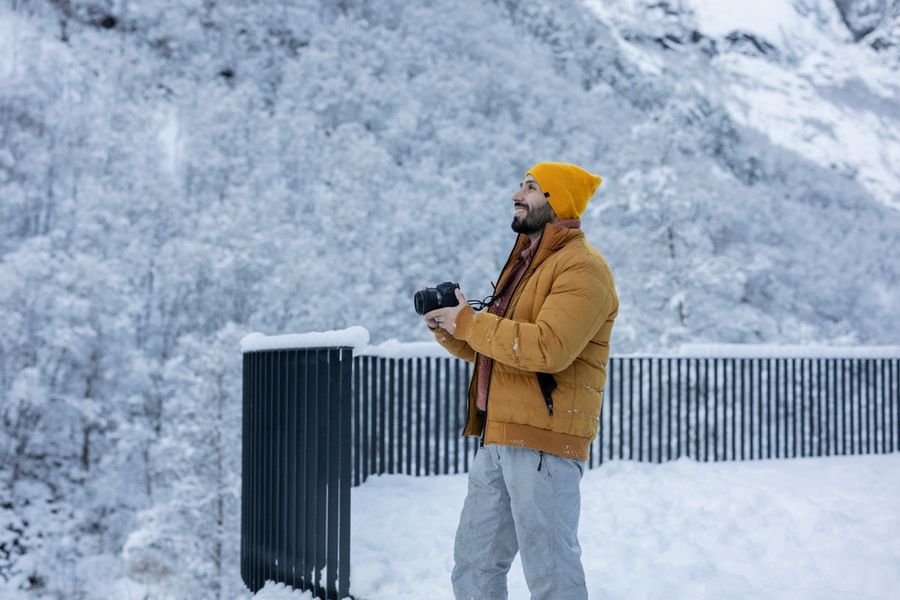
Incorporating color for contrast can transform winter's monochromatic landscapes. Using colorful clothing or props can create striking images, while framing subjects with natural elements like trees or rocks can enhance the snowy backdrop ( source ).
Creative Composition and Lighting
Winter offers unique lighting challenges and opportunities. While colorful sunrises and sunsets are less frequent, overcast days are ideal for capturing small scenes or winter waterscapes. Bright days can highlight snow-covered trees and contrast with blue skies ( source ). Utilizing negative space in winter compositions can create minimalist and powerful images, especially when a subject in the foreground adds depth ( source ).
Technical Considerations
Mastering exposure settings is crucial in winter photography. Manual adjustments can help avoid underexposure and achieve vibrant shots. Be cautious with flash, as it can overexpose snowy scenes ( source ).
Shooting in RAW format is also recommended, as it captures all image data, providing greater flexibility in post-processing, particularly for adjusting exposure, contrast, and white balance in snow-filled images ( source ).
Why You Should Learn More About Winter Photography Today
Winter photography is a rewarding endeavor that allows photographers to capture the enchanting beauty of the season. By mastering the techniques and preparations necessary for shooting in cold weather, photographers can create stunning images that highlight the unique qualities of winter landscapes.
From understanding exposure settings to creatively using lighting and composition, there is much to explore and learn in the realm of winter photography. Embracing these techniques can lead to capturing breathtaking images that showcase the magic and beauty of winter.